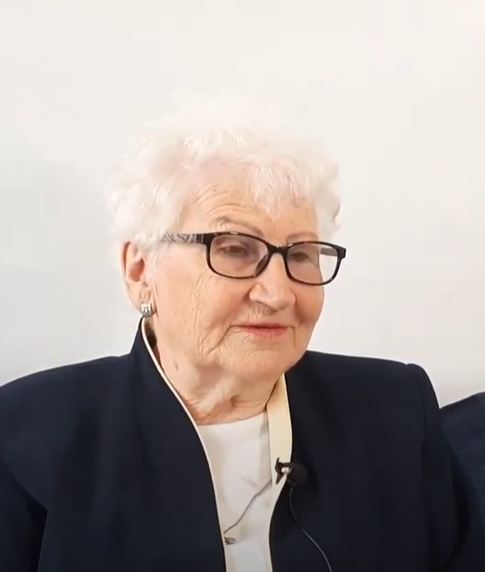
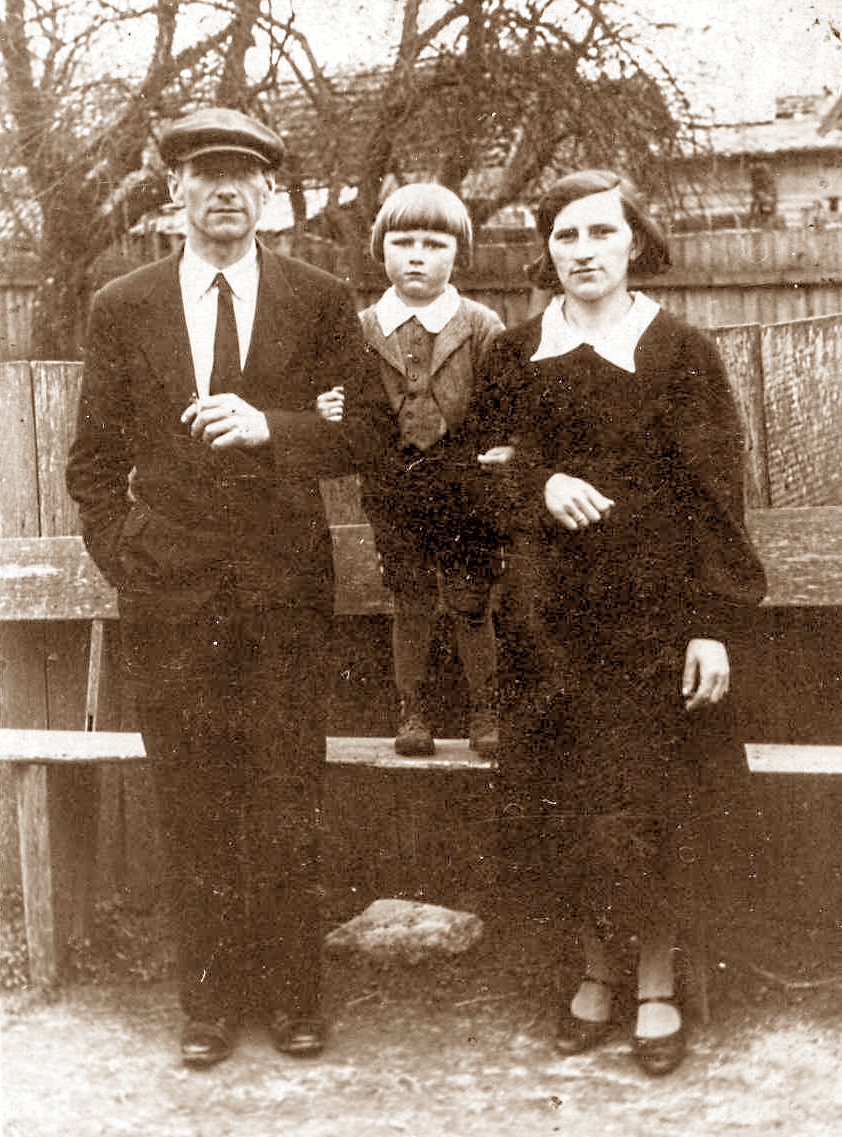

KAZIMIERA JAMROZ was born on January 1, 1938 in the town of Majdan Nepryski (Józefów commune), where her parents had a small farm. They did well, because her father played in an orchestra and earned extra money as a 'village handyman'. Mrs. Kazimiera had an older brother.
She was less than 2 years old when World War II broke out, and 5 years old when the Germans started the deportation action. She vaguely remembers the war, but there are facts that forever stuck in her memory: her father's farewell in September 1939 (he was mobilized, but he quickly returned from the war), German occupation, air raids and the roar of bombers, carriages full of Jews going to Bełżec (near her house there were railway tracks, and 2 kilometers further the Długi Kąt station), a plane crashed in the field, paper tapes from teletypes that the Germans gave children to play...
Kazimiera's family miraculously avoided deportation during the pacification of the village - her uncle was the head of the village and asked the Germans to release them. They experienced moments of horror with her mother as they were caught carrying food for partisans. They were to leave the basket with food in a meeting point near the forest, in the village of Pardysówka, but they did not get there. They were transported with other captives to Zwierzyniec. After a few days, however, the Germans released all of them.
At the end of the war, her father worked on the railroad and they could feel relatively safe. She doesn't remember the end of the war and related events.
She remembers though the first days at school and the joy of being able to live normally. She attended primary school in her village - Majdan Nepryski, and later secondary school in Józefów. When she turned 18, her father died and she had to go to work. She has worked in the health service throughout her professional life. She got married and raised her daughters in Józefów. After her husband's death, she moved to Zamość.
She was less than 2 years old when World War II broke out, and 5 years old when the Germans started the deportation action. She vaguely remembers the war, but there are facts that forever stuck in her memory: her father's farewell in September 1939 (he was mobilized, but he quickly returned from the war), German occupation, air raids and the roar of bombers, carriages full of Jews going to Bełżec (near her house there were railway tracks, and 2 kilometers further the Długi Kąt station), a plane crashed in the field, paper tapes from teletypes that the Germans gave children to play...
Kazimiera's family miraculously avoided deportation during the pacification of the village - her uncle was the head of the village and asked the Germans to release them. They experienced moments of horror with her mother as they were caught carrying food for partisans. They were to leave the basket with food in a meeting point near the forest, in the village of Pardysówka, but they did not get there. They were transported with other captives to Zwierzyniec. After a few days, however, the Germans released all of them.
At the end of the war, her father worked on the railroad and they could feel relatively safe. She doesn't remember the end of the war and related events.
She remembers though the first days at school and the joy of being able to live normally. She attended primary school in her village - Majdan Nepryski, and later secondary school in Józefów. When she turned 18, her father died and she had to go to work. She has worked in the health service throughout her professional life. She got married and raised her daughters in Józefów. After her husband's death, she moved to Zamość.

HISTORICAL FACTS IMPORTANT FOR BIOGRAPHY:
1. Majdan Nepryski is located in the center of Roztocze, near the Solska Primeval Forest, on the Biłgoraj - Tomaszów Lubelski route.
During World War II, the town was located in the General Government. This area was covered by the Zamość Uprising (defense of the Zamość region against German displacements, carried out according to the assumptions of the General Eastern Plan, at the turn of 1942 and 1943).
There was an outpost of the Home Army in the village, commanded by Franciszek 'Hedgehog' Mielniczek.
2. Bełżec. The German death camp in Bełżec was a center for the extermination of the Jewish population, in which from March to December 1942 about 450,000 people were murdered, mainly Jews from Poland, but also from Germany, Austria, the Czech Republic, Slovakia, as well as 30,000 Roma people.
1. Majdan Nepryski is located in the center of Roztocze, near the Solska Primeval Forest, on the Biłgoraj - Tomaszów Lubelski route.
During World War II, the town was located in the General Government. This area was covered by the Zamość Uprising (defense of the Zamość region against German displacements, carried out according to the assumptions of the General Eastern Plan, at the turn of 1942 and 1943).
There was an outpost of the Home Army in the village, commanded by Franciszek 'Hedgehog' Mielniczek.
2. Bełżec. The German death camp in Bełżec was a center for the extermination of the Jewish population, in which from March to December 1942 about 450,000 people were murdered, mainly Jews from Poland, but also from Germany, Austria, the Czech Republic, Slovakia, as well as 30,000 Roma people.