The day of September 19, 1939 stuck in her memory. She witnessed a fierce battle between Poles and Germans in a nearby gorge. 14 Polish soldiers died there. Many were taken prisoners. Mrs. Sabina worships this place to this day. On her initiative a cross commemorating that tragic event was erected there.
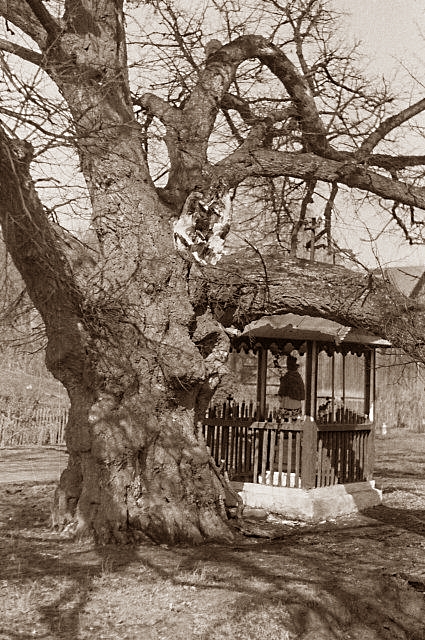
The first repressive measures against the inhabitants of Majdan Sitaniecki were used by Germans in November 1939. They surrounded the town, searched houses, they were very brutal. They were looking for a weapon that Polish soldiers left there in September. They found nothing, but four residents lost their lives. Much of the weapon, which was later taken over by partisans, was hidden in the attic of St. Anthony's Chapel.
As early as 1940, resistance movement began to form in that area. Young men (among others, Mrs. Sabina's brother - Józef Kaluźniak, her neighbor and later husband - Władysław Sołowiej and brother of the second husband - Franciszek Kędziera) belonged to the Union of Armed Struggle and later the Home Army. Aleksander Soboń, nicknamed "Wicher", quartered next door.
In November 1941, the Germans started to deport the Polish population. They displaced the inhabitants of the nearby villages of: Huszczka Duża, Huszczka Mała, Wysokie, Białobrzegi, Bortatycz and Podhuszczki. Germans and Volksdeutsche from Bessarabia (called "black") lived in Polish households.
Majdan Sitaniecki was not displaced because its inhabitants worked as forced laborers in a huge estate, taken over by the Germans, in the forest and in the sawmill. The supervisor on the property was SS major Manthaj.
Mrs. Sabina worked for over two years in this property, 5 kilometers away from her house. First as a housekeeper, later in a sawmill and burning charcoal.
She witnessed many armed actions that the partisans organized against the occupiers, colonists and collaborators. They blew up bridges and trains. On the night of April 28-29, 1944, they attacked Huszczka Duża and Huszczka Mała, taking supplies. They burned both villages and killed 28 colonists. It was a severe blow to the occupier.
April 3, 1944, Mrs. Sabina remembered her whole life. On that day, a 300-member unit of Polish and Soviet partisans, who were heading for the grouping to the Solska Forest, was attacked by the Germans. Planes bombed the village, 20 people were killed and 82 homes were burned. And the end of the war was so close...
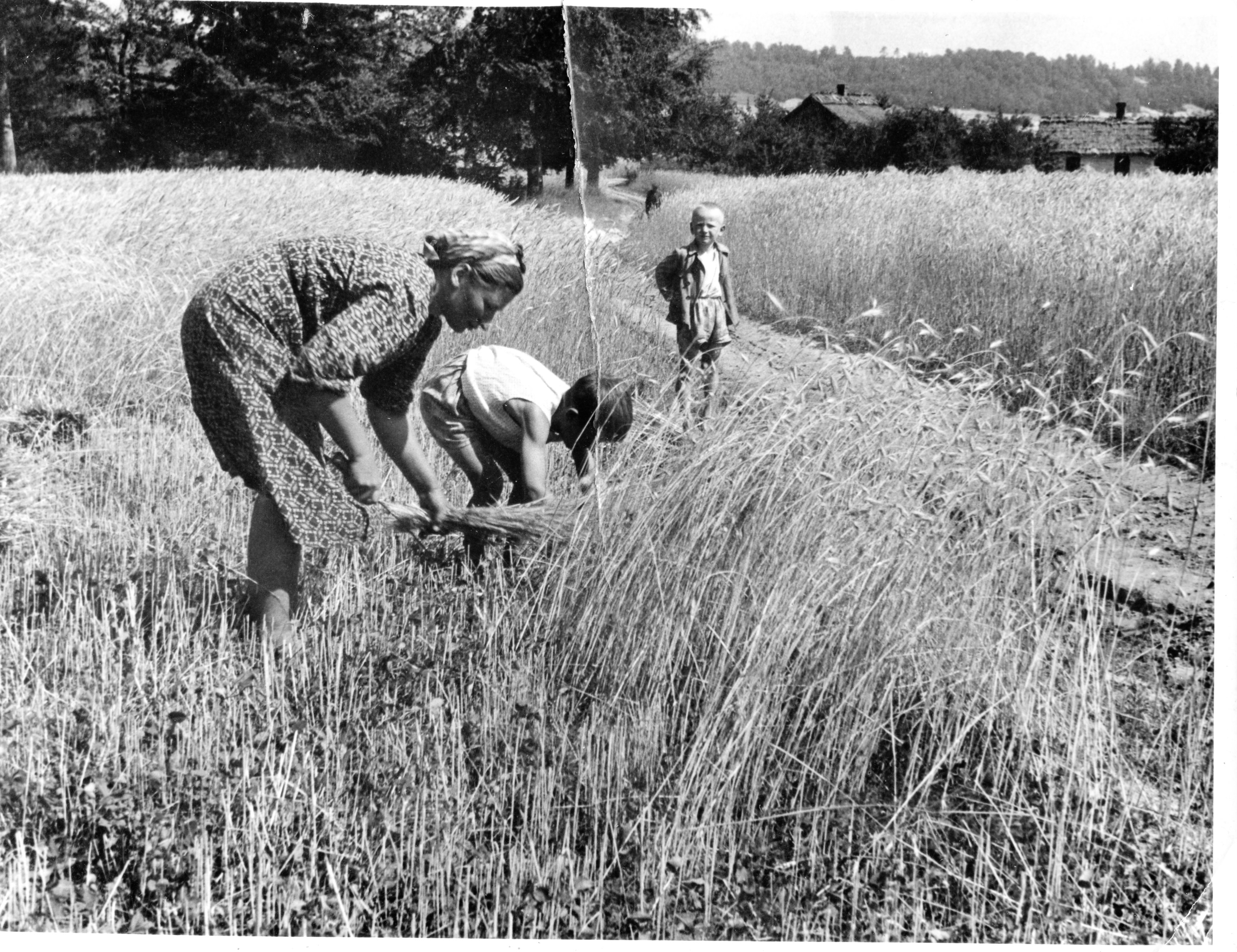
After the war, life was difficult. There was joy and there was sadness - she says. The first husband died, then there was the second. She gave birth to three sons. She lived all the time in her Bezednia (part of Majdan Sitaniecki). Now, because of her age and health problems, she lives with her son in Orłów Murowany. However, she often tells him to drive her home, where it all began...
September campaign:
September 19, 1939 - the battle in the forests of Majdan Sitaniecki. 14 Polish soldiers died here. The site of the battle is commemorated by a cross and the event by a monument in the center of the village.
Years of German occupation:
The Germans intended to deport all Poles from the Zamość region. At the beginning of November 1941, by order of Odilo Globocnik, 2000 peasants from 6 villages were displaced. These were the first displacements. By August 1943, 110,000 people from 297 villages were displaced.
November 6, 1941 - they displaced the villages of Huszczka Mała and Huszczka Duża (367 people) and settled Volksdeutsche and Germans from Bessarabia. Majdan Sitaniecki was not displaced, as its inhabitants were left to forced labor in a large estate, as well as in a forest and a sawmill.
Partisan actions in this area (from 1940)
Subversive actions: attacks on railway structures, bridges, clashes with German units.
April 28, 1943 - partisan action in Huszczka Mała - obtaining weapons, food and burning down the village where only German settlers and Ukrainian volksdeutsche lived.
April 30, 1944 - action - an ambush in which Major SS Manthaj, the commandant of the German police station known for his cruelty, as well as the administrator of the estate and sawmill in Pańska Dolina, died.
Bombing the village
On April 3, 1944, a 300-person unit of Polish and Soviet partisans, which was heading for a training camp in the Solska Forest, deployed in Majdan Sitaniecki. Warned about this, the Germans attacked. Few people died, but almost the entire village burned down - 82 buildings.