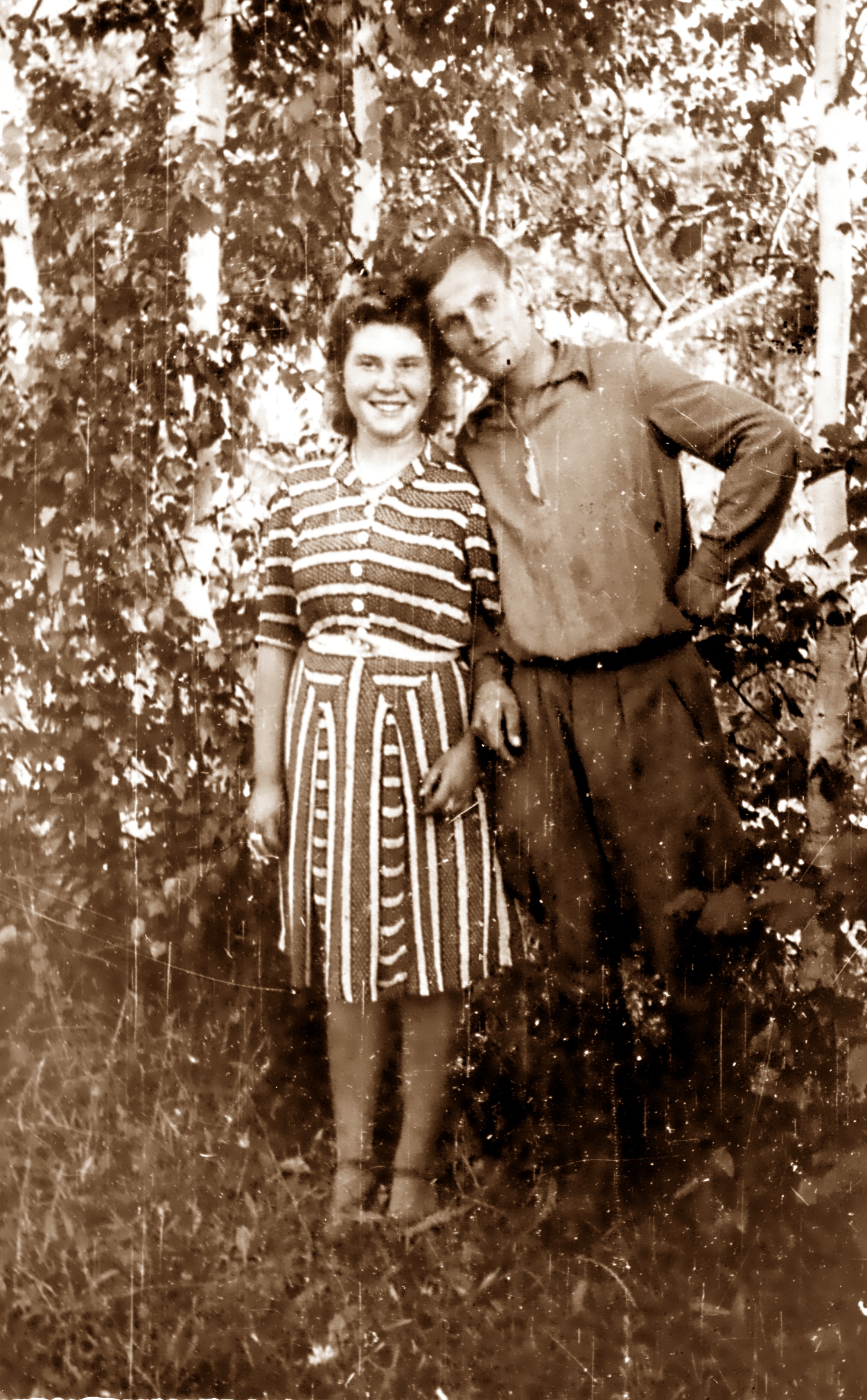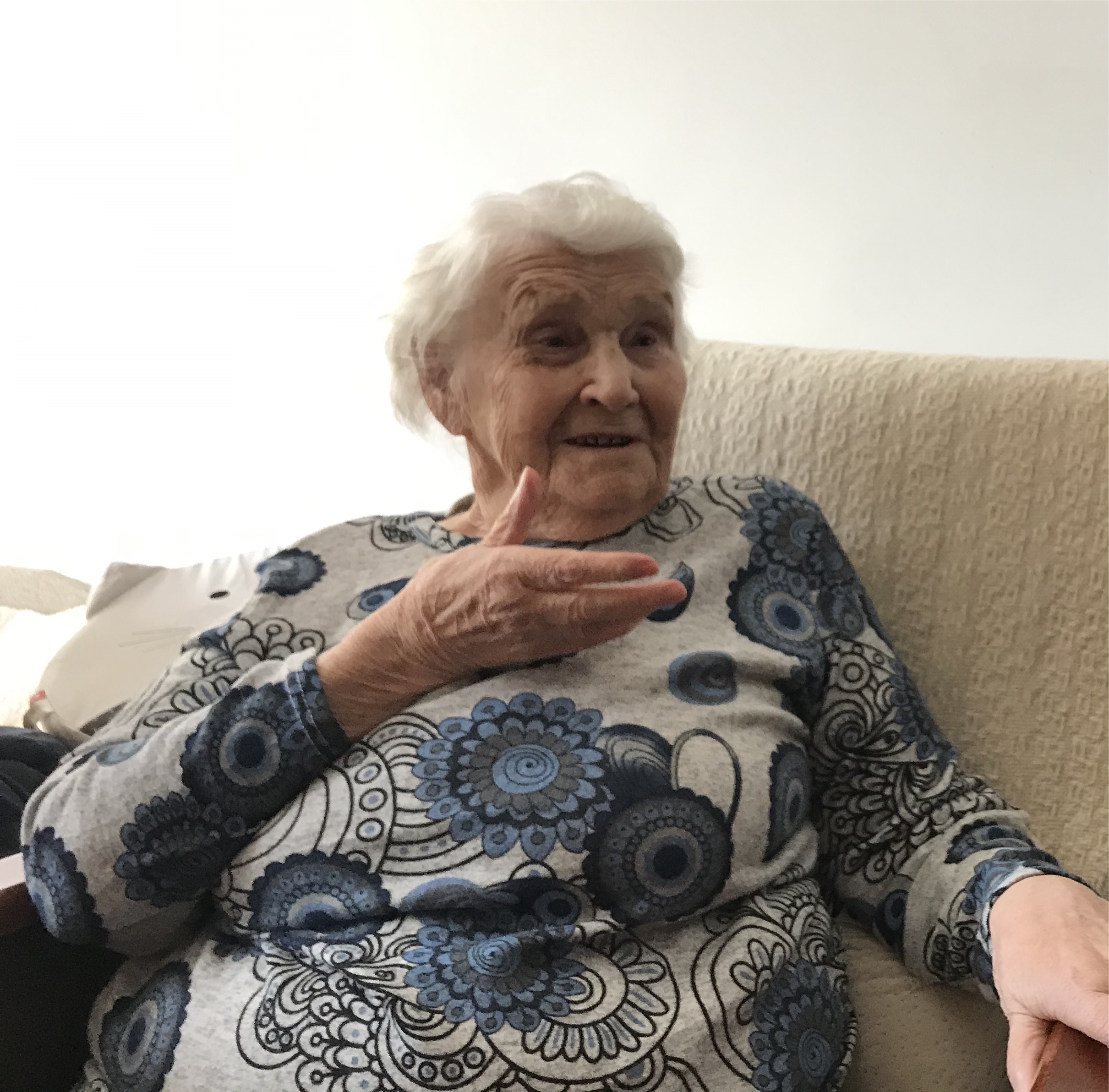


STANISŁAWA RYBIŃSKA née Mazurek was born on April 8, 1927 in Kolonia Siedliszczki near Rejowiec (Chełm county). She was the third and youngest child in the family; she had 11 years older sister and 6 years older brother. Her parents were farmers. They had a medium-sized farm.
Before the outbreak of World War II, four generations lived in their small house: grandmother, parents, Mrs. Stanisława, her brother and sister with her husband and two children. Everyone was working, Mrs. Stanisława's father was a village adinistrator, grandmother "was familiar with herbs" and helped people in need.
Mrs. Stanisława sentimentalizes her childhood, school years and youth. 14 families lived in Kolonia Siedliszczki. They all had farms bought on credit from a bank. Everyone liked each other, helped each other, "worked and had fun together." The village was located near the forest, and a road planted with cherry trees led to Rejowiec town. This friendship among the inhabitants helped them survive the most difficult time, which was war.
Mrs. Stanisława remembers the war from the first day, because in Rejowiec town there was a train station and industrial plants (cement plant, sugar factory) which were the targets of bombing. She remembers German soldiers in elegant uniforms who appeared in Rejowiec in the first days of September 1939, and Soviet soldiers in damaged shoes, uniforms and with rifles on strings, who came from the east at the end of the month. She also remembers the extermination of the Jews from Rejowiec... One of them her father managed to save.
In the summer of 1942, Germans who were going to the Soviet Union quartered in the houses of the Mazurek family and their neighbors. Fortunately, they didn't hurt anyone.
In the Chełm county a resistance movement was formed. Troops of the 27th Volhynia Infantry Division (Home Army Region V) operated in that area. In the winter of 1943, Mrs. Stanisława joined the Home Army. She was affiliated by the platoon commander Kazimierz Gepner, nicknamed “Wąchal”. After completing basic and sanitary training, she took an oath in March and received the nickname "Stokrotka" (Daisy). She took part in subversive actions. As a nurse, she helped the survivors from the village of Marynin, which was completely burned by the Germans on May 5, 1944.
After the liberation, until 1948, Mrs. Stanisława lived in Siedliszczki. Later, her life was - as she said - very ordinary: she got married and followed her husband. They lived in Świdnik, Zamość, Zwierzyniec, Biłgoraj and Hrubieszów. Currently, she lives in Zamość again, close to her daughter, son-in-law and grandchildren.
Before the outbreak of World War II, four generations lived in their small house: grandmother, parents, Mrs. Stanisława, her brother and sister with her husband and two children. Everyone was working, Mrs. Stanisława's father was a village adinistrator, grandmother "was familiar with herbs" and helped people in need.
Mrs. Stanisława sentimentalizes her childhood, school years and youth. 14 families lived in Kolonia Siedliszczki. They all had farms bought on credit from a bank. Everyone liked each other, helped each other, "worked and had fun together." The village was located near the forest, and a road planted with cherry trees led to Rejowiec town. This friendship among the inhabitants helped them survive the most difficult time, which was war.
Mrs. Stanisława remembers the war from the first day, because in Rejowiec town there was a train station and industrial plants (cement plant, sugar factory) which were the targets of bombing. She remembers German soldiers in elegant uniforms who appeared in Rejowiec in the first days of September 1939, and Soviet soldiers in damaged shoes, uniforms and with rifles on strings, who came from the east at the end of the month. She also remembers the extermination of the Jews from Rejowiec... One of them her father managed to save.
In the summer of 1942, Germans who were going to the Soviet Union quartered in the houses of the Mazurek family and their neighbors. Fortunately, they didn't hurt anyone.
In the Chełm county a resistance movement was formed. Troops of the 27th Volhynia Infantry Division (Home Army Region V) operated in that area. In the winter of 1943, Mrs. Stanisława joined the Home Army. She was affiliated by the platoon commander Kazimierz Gepner, nicknamed “Wąchal”. After completing basic and sanitary training, she took an oath in March and received the nickname "Stokrotka" (Daisy). She took part in subversive actions. As a nurse, she helped the survivors from the village of Marynin, which was completely burned by the Germans on May 5, 1944.
After the liberation, until 1948, Mrs. Stanisława lived in Siedliszczki. Later, her life was - as she said - very ordinary: she got married and followed her husband. They lived in Świdnik, Zamość, Zwierzyniec, Biłgoraj and Hrubieszów. Currently, she lives in Zamość again, close to her daughter, son-in-law and grandchildren.
HISTORICAL FACTS IMPORTANT FOR BIOGRAPHY:
Partisan actions of the Union Of Armed Struggle Of Home Army from the region V:
November 1942 - stopping a freight train and taking large amounts of weapons, ammunition and military equipment.
1943 - Action 'Punctual' - trains carrying supplies, ammunition and weapons were blown up 30 times.
1944 - Fights with German and Ukrainian troops, executing sentences on traitors and informers, blowing up trains.
Communist authorities in Poland recognized the Home Army as "the opposition underground" and in November 1944 carried out pacification operations. Many partisans were sent to prisons and Soviet labor camps.
Partisan actions of the Union Of Armed Struggle Of Home Army from the region V:
November 1942 - stopping a freight train and taking large amounts of weapons, ammunition and military equipment.
1943 - Action 'Punctual' - trains carrying supplies, ammunition and weapons were blown up 30 times.
1944 - Fights with German and Ukrainian troops, executing sentences on traitors and informers, blowing up trains.
Communist authorities in Poland recognized the Home Army as "the opposition underground" and in November 1944 carried out pacification operations. Many partisans were sent to prisons and Soviet labor camps.